
A person often feels lost in the sealant aisle. The global construction sealant market, valued at over USD 7.6 billion, offers countless options. Choosing the right one is simpler than it appears. A project’s success depends on a few key factors. High-performance options like a Class 50 Sealant are vital for specific applications, showing the need for correct selection. Trusted brands like Junbond engineer products for reliability.
A successful outcome relies on three things: the material being sealed, the project’s location, and the expected joint movement.
Understanding these elements helps anyone find the perfect sealant.
First, Understand the “Big Three” Decision Factors
Selecting the correct sealant moves beyond simply picking a tube off the shelf. A methodical approach ensures a durable, long-lasting seal. The process begins with an analysis of three fundamental project variables: the substrate, the environment, and the anticipated movement.
Factor 1: What Material Are You Sealing?
A sealant’s primary job is to adhere to a surface, or substrate. Different materials possess unique properties that affect this bond. Understanding the substrate is the first step toward a successful application. Key material characteristics include:
·Porosity: Porous materials like concrete or wood absorb a sealant differently than non-porous ones like glass or metal. A sealant penetrates a porous surface, which can enhance the bond and block corrosive elements from reaching the substrate. Low porosity in a material, conversely, helps form a compact, robust bond at the interface.
·Coatings: The presence of paint, oil, or other coatings can prevent proper adhesion.
·Age and Condition: Weathered or deteriorating materials may require special preparation or primers.
Pro Tip: When bonding dissimilar materials, such as metal trim to a concrete foundation, a specialized sealant is essential. Polyurethane sealants are highly effective for these applications due to their strong adhesive properties and durability. High-quality products from trusted brands like Junbond are engineered to provide reliable adhesion across a wide range of substrates.
Factor 2: Where Is Your Project Located?
The project’s environment dictates the external stresses the sealant must endure. A sealant used indoors faces different challenges than one used outdoors.
For exterior applications, a primary concern is ultraviolet (UV) radiation from the sun. Continuous UV exposure causes gradual aging and deterioration in many sealants. It can break down a sealant’s polymer chains, leading to color fading, surface cracking, and eventual failure. Asphalt-based sealants, for example, show obvious surface cracks and color changes after prolonged UV aging.
Temperature is another critical environmental factor. Every sealant has a specific temperature range for effective application. Applying a sealant when it is too cold can prevent it from bonding correctly. Applying it in extreme heat can cause it to cure too quickly, compromising its performance. Always consult the manufacturer’s specifications.
| Sealant Type | Typical Service Temperature Range |
|---|---|
| Standard Polyurethane | -40°F to 200°F (-40°C to 93°C) |
| High-Temperature Polyurethane | Up to 300°F (149°C) continuous |
Factor 3: How Much Will the Joint Move?
Construction materials are not static. They expand with heat and contract with cold. The gap between these materials, known as a joint, must be filled with a sealant flexible enough to accommodate this movement.
This “stretchiness” is called movement capability. It is expressed as a percentage of the joint’s original width. For example, a sealant with ±25% movement capability in a 1-inch joint can stretch to 1.25 inches or compress to 0.75 inches without failing.
Sealants are categorized into classes based on this capability.
| Class | Movement Capability | Typical Applications |
|---|---|---|
| 12.5 | ±12.5% | Interior trim, low-movement joints |
| 25 | ±25% | Most expansion joints, window perimeters |
| 35 | ±35% | Intermediate movement applications |
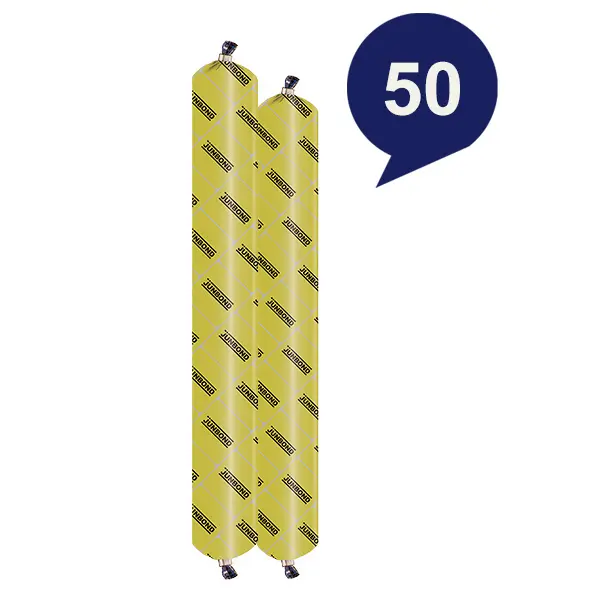
| 50 | ±50% | High-movement joints, curtain walls |
| 100/50 | +100% / -50% | Extreme movement, specialized structures |
For demanding applications with significant thermal expansion and contraction, such as large glass panels or metal curtain walls, a high-performance product like a Class 50 Sealant is necessary. These low-modulus sealants remain soft and flexible, exerting minimal stress on the substrate even as the joint moves. This ensures the bond remains intact through extreme temperature cycles.
Decoding Sealant Types: Silicone, Polyurethane, and More
Once a project’s material, location, and movement are understood, the next step is choosing a sealant chemistry. The three most common types in construction are silicone, polyurethane, and acrylic latex. Each possesses a unique chemical makeup, granting it specific strengths and ideal applications.
Silicone Sealants: The Go-To for Wet Areas
Silicone sealants are a top choice for environments with high moisture. Their formulation from an inorganic silicone-oxygen polymer backbone provides exceptional stability against environmental degradation. This structure makes them inherently waterproof and highly resistant to UV light, ensuring long-term performance. A high-quality silicone sealant from a brand like Junbond can have a lifespan of 20 years or more.
Their primary advantage lies in their performance in wet areas.
Key Benefits of Mildew-Resistant Silicone:
·Anti-Mold & Anti-Bacterial: Formulations with anti-fungal agents actively resist the growth of mildew and mold in humid spaces like bathrooms and kitchens.
·Waterproof & Durable: They create a permanent, flexible, waterproof barrier that withstands constant water exposure.
·Non-Yellowing: High-quality silicones maintain a clean, white appearance over time without cracking or shrinking.
A crucial characteristic of silicone is its surface property. Paint will not adhere to a 100% silicone sealant. For projects requiring a painted finish, professionals must choose a different sealant type.
Polyurethane Sealants: The Powerhouse for Outdoors
Polyurethane sealants are organic polymers known for their incredible durability and adhesive strength. These sealants form when a polyol resin reacts with an isocyanate curing agent. The resulting compound offers superior tensile strength and remarkable abrasion resistance, making it a true workhorse for demanding applications.
Polyurethane excels at resisting wear from sliding, impact, and slurry. Its elastomeric nature allows it to absorb impact energy and recover with minimal damage. This makes it ideal for high-traffic areas and joints exposed to physical stress.
It is the preferred choice for many exterior applications, especially on porous substrates.
·Construction Joints: Its durability makes it perfect for sealing expansion joints in concrete and masonry. High-performance versions, such as a Class 50 Sealant, provide the flexibility needed for joints with significant movement.
·Porous Materials: The sealant’s molecular structure creates a powerful mechanical bond with materials like concrete, brick, and wood.
·Paintability: Unlike silicone, polyurethane is paintable after it cures. This allows for a seamless, color-matched finish on building exteriors, window frames, and door perimeters.
While extremely tough, polyurethane sealants typically have a lifespan of 5 to 15 years, depending on the specific formulation and environmental exposure.
Latex/Acrylic Sealants: The Painter’s Best Friend
Latex or acrylic sealants are water-based products prized for their ease of use and paintability. They are the standard choice for general-purpose interior sealing, particularly for preparing surfaces before painting. Their reputation as “the painter’s best friend” is well-earned.
These sealants offer several advantages for interior projects:
·Easy Application and Cleanup: They apply smoothly and can be tooled with a wet finger. Cleanup is simple, requiring only soap and water.
·Excellent Paintability: Acrylic latex is designed to be painted. It creates a smooth, seamless finish between trim, walls, and baseboards.
·Flexibility: It provides enough flexibility to handle the slight movements of interior wood trim and drywall.
Painters rely on acrylic latex to seal gaps and cracks before applying paint, ensuring a flawless final appearance. It is important to allow the sealant proper time to dry.
| Curing Stage | Typical Time |
|---|---|
| Touch Dry | 10–20 minutes |
| Paint-Ready | 30–60 minutes |
| Full Cure | 24 hours |
Painting too soon can cause cracking or poor paint adhesion. With a typical lifespan of 5 to 10 years, acrylic latex is a reliable and cost-effective solution for interior aesthetic applications.
MS Hybrid Sealants: The Best of Both Worlds
A newer category of sealant technology, the MS (Modified Silicone) Hybrid, represents a significant advancement in the industry. These sealants are engineered to overcome the specific limitations of traditional chemistries. They provide a versatile, high-performance solution for a wide range of construction challenges. An MS Hybrid effectively merges the most desirable characteristics of both silicone and polyurethane into a single, powerful product.
This innovative blend offers a unique combination of features. Professionals no longer need to choose between the strengths of different sealant types.
An MS Hybrid sealant combines the best of polyurethane and silicone technologies. It blends the flexibility of polyurethane with the clean curing and low VOC profile of silicones.
This synergy results in a product with exceptional capabilities:
·It possesses the durability and paintability of polyurethane.
·It delivers the superior weather and UV resistance of silicone.
·It stands up to abrasion while remaining highly flexible.
The performance advantages of MS Hybrids make them suitable for demanding jobs. They offer superior performance due to their ability to bond effectively on damp or wet surfaces, a common challenge on construction sites. Their excellent UV resistance ensures long-term durability when exposed to direct sunlight. Furthermore, MS Hybrids maintain stability across a wide range of temperatures, and their lasting elasticity contributes to a durable, long-lasting seal. This makes them a reliable choice for both interior and exterior applications.
For projects requiring maximum performance, advanced formulations from brands like Junbond deliver exceptional results. Many MS Hybrid products meet high-movement standards, functioning as a Class 50 Sealant for dynamic joints. Their versatility and strength make them a true problem-solver for modern construction.
Flexibility Explained: Why “Stretchiness” Matters
Construction materials constantly expand, contract, and shift due to temperature changes and structural loads. A rigid filler would crack and fail under this stress. Sealants solve this problem with elasticity. Elastomers are materials that stretch, bend, and recover their shape. This unique ability allows them to handle expansion, compression, and lateral movement, which is crucial for construction projects.
Low vs. High Movement Joints
Joints are categorized based on their expected movement. Low-movement joints, like those around interior trim, experience minimal change. High-movement joints, however, face significant expansion and contraction. Examples include large concrete expansion joints and building curtain walls. Projects requiring high movement often use materials with maximum flexibility and resilience. Preformed expansion joints made from rubber or foam are ideal for these applications.
A sealant’s flexibility is what prevents joint failure. It allows the seal to remain intact through years of thermal cycling.
How Flexible Sealants Work:
·They absorb stress from movement without losing adhesion.
·They bond dissimilar materials that expand and contract at different rates.
·They maintain their elasticity over time, unlike rigid adhesives that become brittle.
Understanding High-Performance Options like Class 50 Sealant
The industry measures a sealant’s flexibility using a classification system. A high-performance rating ensures the product can handle extreme conditions. A Class 50 Sealant, for example, is engineered for joints with significant movement. This rating, defined by ASTM C920 standards, signifies that the sealant can accommodate expansion or contraction up to 50% of the original joint width.
This capability makes it an excellent choice for demanding, non-traffic applications. Professionals use this type of sealant for building facade systems and glazing, where materials like aluminum and mortar undergo constant thermal stress. Choosing a high-performance product like a Class 50 Sealant provides a durable, lasting seal for the most dynamic joints in modern construction.
Your Quick-Reference Selection Guide
Navigating sealant choices becomes straightforward when matching the product to the application. This guide provides clear recommendations for common construction projects.
For Kitchens and Bathrooms
Kitchens and bathrooms present a constant challenge with moisture and humidity. These conditions create an ideal environment for mold and mildew growth. A professional chooses a 100% silicone sealant for these wet areas.
Key Attributes for Wet Areas:
·Waterproof: It forms an impermeable barrier against water intrusion.
·Mildew Resistance: High-quality formulations contain fungicides that actively prevent mold and mildew growth.
·Flexibility: The sealant remains flexible, preventing cracks from forming around tubs and sinks.
For a lasting, clean seal in these high-humidity zones, a premium mildew-resistant silicone sealant is the superior choice.
For Windows and Doors
Sealing exterior windows and doors requires a product that withstands the elements. The joint must endure UV radiation, rain, and significant temperature fluctuations. Professionals often select polyurethane or advanced MS Hybrid sealants for this task.
·Weather Resistance: These sealants offer excellent resistance to UV degradation and weathering, ensuring a long service life.
·Paintability: Unlike silicone, both polyurethane and MS Hybrids are paintable. This allows for a seamless, integrated finish with the surrounding trim and siding.
·Strong Adhesion: They create a durable, weatherproof bond to a wide variety of materials, including vinyl, wood, aluminum, and masonry.
For Concrete and Driveways
Concrete and masonry joints endure significant stress from vehicle traffic and thermal movement. A sealant for these areas must be exceptionally tough and flexible. Polyurethane sealant is the industry standard for these demanding applications. High-performance products from brands like Junbond are engineered specifically for this purpose.
| Challenge | Solution / Sealant Attribute |
|---|---|
| Heavy Traffic & Abrasion | High Durability: Polyurethane resists wear, tear, and impact. |
| Expansion & Contraction | High Movement Capability: A Class 25 or Class 50 rating is essential. |
| Weather & Chemical Exposure | Excellent Resistance: It stands up to water, UV rays, and common chemicals. |
Choosing a robust polyurethane sealant ensures that driveways, sidewalks, and patios remain protected and structurally sound.
For Interior Trim and Walls
Achieving a flawless, professional paint job indoors requires careful attention to detail. Gaps between baseboards, door frames, crown molding, and walls can detract from an otherwise perfect finish. For these interior applications, painters and professionals turn to acrylic latex sealant. It is widely known as the painter’s best friend for good reason.
The primary goal for interior sealing is aesthetic. A painter uses sealant to create a smooth, continuous surface that is ready for paint. Acrylic latex is the ideal choice for this task.
Pro Tip: For a perfect finish, apply a thin bead of sealant into the gap. Immediately tool the bead with a wet finger or a sealant tool to press it into the joint and smooth the surface. This simple step removes excess product and creates an invisible transition between the trim and the wall.
The water-based formulation of acrylic latex offers several key advantages for indoor work.
·Superior Paintability: It is specifically designed to be painted. Paint adheres perfectly to the cured sealant, ensuring a uniform color and sheen without cracking or flashing.
·Easy Application & Cleanup: The sealant applies smoothly from the tube. Any mistakes or excess material clean up easily with just soap and water, eliminating the need for harsh solvents.
·Low Odor: Water-based sealants have very little odor, making them much more pleasant to use in enclosed interior spaces.
·Sufficient Flexibility: It provides enough elasticity to accommodate the minor seasonal expansion and contraction of wood trim and drywall, preventing the seal from cracking over time.
For reliable results, professionals select high-quality acrylic latex products from trusted manufacturers like Junbond. These sealants ensure consistent performance, easy tooling, and a durable base for a beautiful, long-lasting paint job.
Essential Tips for a Professional Application
Even the best sealant can fail without proper application. A professional result depends on meticulous technique from start to finish. Following a systematic process for preparation, application, and tooling ensures a durable, aesthetically pleasing seal that performs as intended.
Surface Preparation is Non-Negotiable
The success of any sealant job begins with the substrate. All surfaces must be clean, dry, and completely free of dust, grease, or old sealant that could hinder adhesion. For removing old, failed caulk, a professional first softens the material with a remover and then slices it away. Any remaining residue is scraped off carefully.
For non-porous surfaces like metal or glass, a “two-cloth” cleaning method is highly effective.
1.A technician applies a solvent with one clean, lint-free cloth.
2.They immediately wipe the area dry with a second, separate clean cloth before the solvent evaporates.
Pro Tip: While many high-quality sealants from brands like Junbond offer excellent adhesion, applying a manufacturer-recommended primer is inexpensive insurance. A professional applies a thin film of primer to the clean, dry surface and allows it to dry completely before sealing.
How to Apply a Perfect, Smooth Bead
Applying a consistent bead is a skill that prevents air bubbles and ensures full joint coverage. A professional starts by cutting the nozzle tip to match the desired bead size. They then use a high-quality caulk gun with a smooth trigger mechanism for maximum control.
To apply the sealant, a technician holds the caulk gun at a consistent 45-degree angle to the joint. They apply steady, even pressure to the trigger, moving at a pace that matches the sealant’s flow rate. This technique pushes the sealant into the joint, filling it completely and minimizing the risk of trapped air. For vertical joints, working from the top down prevents sagging.
Tooling for a Flawless Finish
Tooling is the final step that creates a clean, professional look and ensures a proper seal. This process involves smoothing the bead immediately after application. It presses the sealant firmly against the joint surfaces, guaranteeing intimate contact and strong adhesion.
A professional can use a dedicated plastic spatula or a damp, gloved finger for this task. The water acts as a lubricant, allowing for a smooth pass without the sealant sticking. They apply light, consistent pressure in a single, continuous motion. This action shapes the bead into a neat, concave profile that will effectively shed water and resist dirt collection, resulting in a flawless, long-lasting finish.
Why Choosing a Trusted Brand like Junbond Matters
In the construction sealant market, the brand name on the tube is more than just a label. It represents a promise of performance, reliability, and support. While a generic sealant might seem cost-effective initially, professionals understand that a trusted brand provides long-term value and peace of mind. Choosing a reputable manufacturer like Junbond is a critical step toward a successful, durable project.
Consistency and Quality You Can Rely On
Reputable brands build their name on consistent product performance. They invest heavily in research, innovation, and high-quality raw materials. This commitment results in sealants with superior longevity and durability, minimizing the need for future maintenance. A manufacturer’s confidence in its products is often reflected in comprehensive warranties and strong market standing.
A professional knows that the true cost of a sealant includes the labor for application and the potential expense of rework. A reliable product from a trusted brand like Junbond gets the job done right the first time.
Junbond exemplifies this commitment to excellence. The company implements superb quality control throughout all manufacturing stages in its well-equipped facilities. This focus on technical advancement and rigorous testing ensures every cartridge delivers the performance customers expect.
Finding the Right Product for Your Needs
Top-tier brands do more than just sell products; they offer solutions. They provide a diverse portfolio of sealants engineered for specific applications, from high-movement structural glazing to simple interior trim. This makes finding the perfect match for any project straightforward.
Brands with a strong reputation often earn industry recognition for their quality. For instance, Junbond’s silicone sealants are recommended products by the China Construction Metal Structure Association, a testament to their adherence to high industry standards. Choosing a brand with this level of credibility offers several advantages:
·Proven Performance: Positive consumer reviews and a strong market presence indicate that the products deliver on their promises.
·Technical Support: Established companies provide clear guidance and technical data to help professionals select the correct sealant.
·Specialized Solutions: They offer a complete range of products, including silicones, polyurethanes, and advanced MS Hybrids, to meet any challenge.
Ultimately, a trusted brand provides the confidence that the chosen sealant will perform reliably for years to come.
A person is now equipped to choose the right sealant with confidence. A professional’s success hinges on matching the product to the project’s specific needs. They consider the material, environment, and movement.
·Silicone is excellent for wet areas and expansion joints where movement is crucial.
·Polyurethane offers superior resistance to UV radiation and foot traffic for tough outdoor jobs.
·Acrylic Latex remains the painter’s choice for sealing interior trim before painting.
A builder can stop guessing and start sealing like a pro.
FAQ
Can a professional use one sealant for all jobs?
A single sealant is not a universal solution. A professional selects the correct sealant chemistry for each task. Silicone excels in wet areas. Polyurethane is ideal for high-traffic concrete. Using the right product, like those from Junbond, ensures optimal performance and durability for the specific application.
How long does sealant take to dry?
Cure times vary based on sealant type, temperature, and humidity. A professional always checks the manufacturer’s instructions.
General Cure Times:
·Latex/Acrylic: Paintable in 30-60 minutes; full cure in 24 hours.
·Silicone/Polyurethane: Tack-free in hours; full cure can take several days.
What is the difference between caulk and sealant?
The main difference is flexibility. Sealants are highly flexible elastomers designed to accommodate joint movement. Caulks are less flexible fillers, typically used to close gaps in low-movement areas before painting. A professional chooses a sealant for dynamic joints that expand and contract.
Why did my old sealant crack or fail?
Sealant failure often results from a few common issues. The wrong type of sealant may have been used for the joint’s movement. Poor surface preparation can prevent proper adhesion. Exceeding the sealant’s movement capability (e.g., using a Class 12.5 for a high-movement joint) also causes failure.
Post time: Dec-22-2025