
Polyurethane windshield adhesive is often seen as a top choice for car windshields. Many auto shops prefer it because it forms a strong, lasting bond. In 2023, polyurethane adhesives held about 31% of the automotive adhesives market, and by 2025, this is expected to reach 38%.
| Advantages | Disadvantages |
|---|---|
| Dissimilar material bonding | Surface preparation is crucial |
| Stress distribution | Longer curing times |
| Weight reduction | Temperature sensitivity |
| Improved aesthetics | Variable chemical resistance |
| NVH reduction | Higher costs |
| Sealing properties | Challenges with reversibility |
This guide will help you pick the right adhesive for your car, especially if you need to fix a leaking windshield.
What is Polyurethane Windshield Adhesive
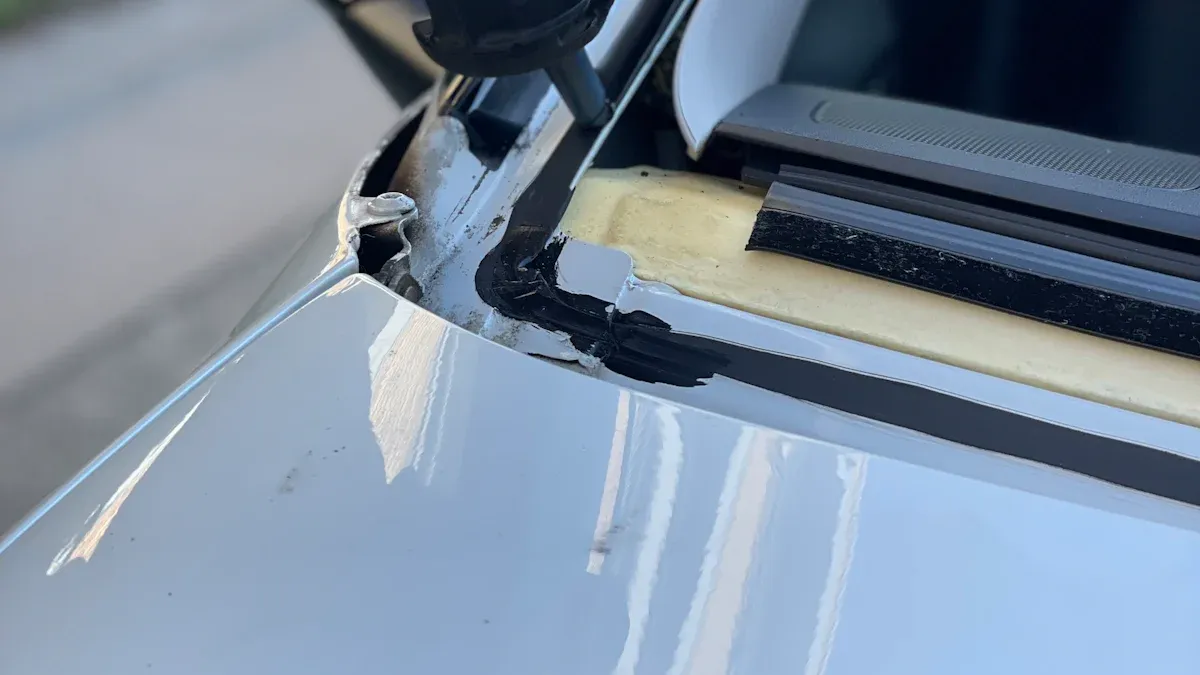
Definition and Main Uses in Automotive
Polyurethane windshield adhesive is a special type of glue used to bond windshields to vehicles. This adhesive is made from polyurethane, a material known for its strength and flexibility. In the automotive industry, it plays a key role in keeping windshields securely attached to car frames. The adhesive must handle strong forces during driving and protect passengers in case of an accident.
Polyurethane adhesives are popular in automotive manufacturing because they offer superior bonding strength and flexibility. These adhesives help vehicles meet strict safety standards. As car designs become more advanced, especially with new driver-assistance systems, the need for reliable adhesives grows. Today, most new vehicles use polyurethane adhesives for windshield installation. The global automotive market continues to expand, and so does the demand for high-performance adhesives that ensure both safety and durability.
Tip: Proper windshield bonding is essential for vehicle safety and structural integrity.
Here is a quick overview of the main properties of polyurethane windshield adhesive:
| Property | Description |
|---|---|
| Strength | Polyurethanes meet high strength requirements for safety functions in windshields. |
| Stiffness | They structurally integrate into the windshield, allowing for reduced weight in vehicle design. |
| Durability | Polyurethanes withstand harsh environmental conditions, ensuring longevity and reliability. |
| Processing | They allow for automated installation due to their ultimate grab properties. |
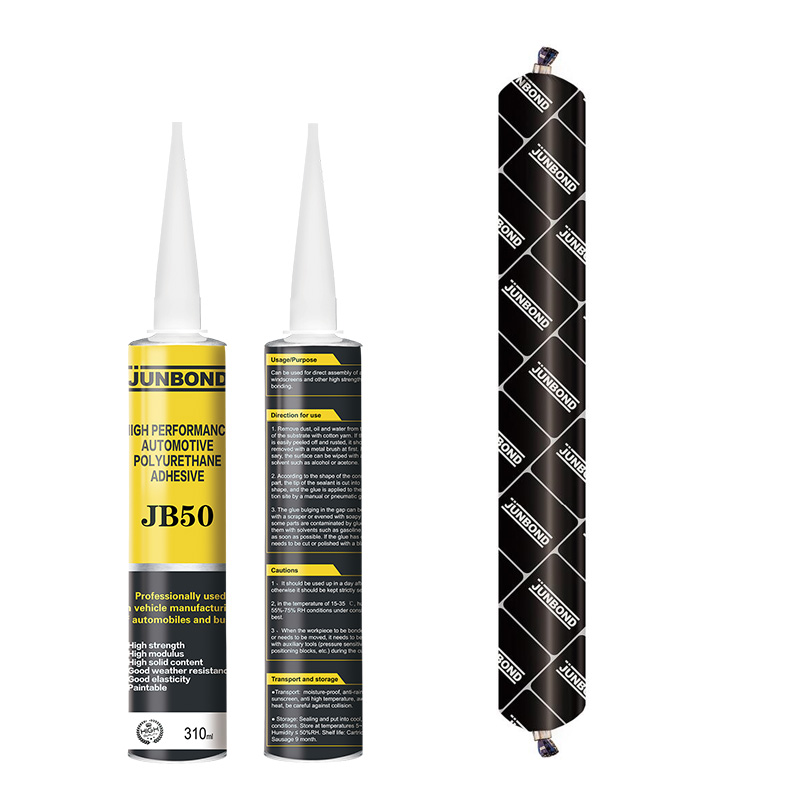
Why JUNBOND JB50 is a Top Choice
JUNBOND JB50 stands out as a preferred option for automotive windshield adhesive applications. This product offers high strength and a high modulus, which means it can handle the demands of modern vehicles. It is a single-component adhesive, making it easy to use in both professional and DIY settings. JB50 cures at room temperature with moisture, so there is no need for extra equipment.
The JB50 formula contains a high solid content, giving it excellent weather resistance and elasticity. It does not release harmful substances, making it safe for both users and the environment. Its paintable surface allows for a seamless finish after installation. The adhesive also comes in different colors to match various automotive needs.
Below is a comparison of JB50 with other polyurethane adhesives:
| Feature | JUNBOND JB50 | Other Polyurethane Adhesives |
|---|---|---|
| High Strength | Yes | Varies |
| High Modulus | Yes | Varies |
| Single Component | Yes | Varies |
| Room Temperature Moisture Curing | Yes | Varies |
| High Solid Content | Yes | Varies |
| Good Weather Resistance | Yes | Varies |
| Good Elasticity | Yes | Varies |
| No Harmful Substances | Yes | Varies |
| No Pollution to Base Material | Yes | Varies |
| Paintable Surface | Yes | Varies |
JUNBOND JB50 delivers reliable performance for automotive windshield bonding, making it a smart choice for anyone seeking safety, durability, and ease of use.
Polyurethane Windshield Adhesive Pros
Strong Bond and Safety for Windshield
Polyurethane windshield adhesive creates a powerful bond between the windshield and the car frame. This strong connection is essential for vehicle safety. The windshield supports the roof and helps protect passengers during accidents. In some rollover situations, the windshield can provide up to 45% of the cabin’s structural strength. Vehicles with a properly installed windshield show a much lower risk of passengers being ejected during a crash.
Using a high-quality adhesive in windshield installation increases the car’s structural integrity. When a collision or rollover happens, the glass bonded with polyurethane can absorb and spread out impact forces, helping to keep everyone inside safer.
Polyurethane sealant is designed to meet strict safety standards. It holds the windshield firmly in place, even under stress. This makes it a top choice for both car manufacturers and repair shops.
Durability and Weather Resistance
Polyurethane windshield adhesive stands out for its durability. It keeps its strength and flexibility in all kinds of weather. The adhesive does not melt or become too soft in hot weather. In cold conditions, it stays flexible and does not turn brittle. This means the windshield remains secure year-round.
·Polyurethane sealant resists UV rays, so it does not yellow or break down after long exposure to sunlight.
·The adhesive keeps its bond even when temperatures change quickly.
·Polyurethane windshield adhesive is reliable in both summer heat and winter cold.
This level of performance gives car owners peace of mind. The windshield stays sealed and protected from leaks, no matter the climate.
Compatibility with Automotive Glass
Polyurethane windshield adhesive works well with different types of automotive glass. Tests show that polyurethane forms a deep bond with glass surfaces. This bond is stronger than what many other adhesives can achieve. Visualization analysis helps experts check for any surface or interfacial defects during curing. Even when air or moisture is present, polyurethane sealant still delivers a strong and uniform bond.
·Polyurethane adhesive penetrates glass better than epoxy adhesives.
·The bond remains strong and even across the entire windshield edge.
·Uniform adhesion is more important than minor defects for long-term performance.
This compatibility ensures that the windshield stays attached and sealed, reducing the risk of leaks or shifting over time.
JUNBOND JB50 Features and Benefits
JUNBOND JB50 brings several advantages to automotive projects. This polyurethane windshield adhesive has a high modulus and impressive tensile strength, which means it can handle the demands of modern vehicles. The adhesive cures at room temperature using moisture, making it easy to apply without special tools.
Key features of JUNBOND JB50 include:
·High modulus and tensile strength for a secure windshield bond
·Room temperature moisture curing for simple application
·Excellent flexibility, allowing the sealant to move with the car’s frame
·Paintable surface for a seamless finish after installation
·No harmful substances released, making it safe for users and the environment
·Available in multiple colors to match different vehicles
JUNBOND JB50 also stands out as an ms polymer sealant. It combines the best qualities of polyurethane and ms polymer sealant technology. This means it offers strong bonding, flexibility, and environmental safety all in one product.
Choosing JUNBOND JB50 ensures that the windshield stays in place, resists weather, and looks great. The adhesive’s performance makes it a reliable solution for both new installations and repairs.
Polyurethane Windshield Adhesive Cons
Longer Curing Time
Polyurethane windshield adhesives and ms polymer sealant products are known for their strong bonds, but they require time to reach full strength. The curing process depends on temperature and humidity. In ideal shop conditions, the initial set can happen in 10 to 30 minutes. However, the minimum drive-away time is usually 1 to 2 hours, and a full structural cure may take 24 to 48 hours. In cold or wet environments, the curing time can extend up to 72 hours. This means that after applying the sealant, the vehicle should not be driven immediately in most cases.
| Condition | Initial Set Time | Minimum Drive-Away Time | Full Structural Cure Time |
|---|---|---|---|
| Ideal Shop Conditions | 10–30 minutes | 1–2 hours | 24–48 hours |
| Cold, Wet Conditions | N/A | N/A | Up to 72 hours |
Compared to other adhesives, polyurethane and ms polymer sealant products have a shorter forming time than silicone or butyl adhesives. Epoxy adhesives, on the other hand, often cure faster and more predictably because they use a chemical reaction instead of moisture from the air.
·Polyurethane adhesives: Short forming time, compatible with many materials.
·Silicone adhesives: Moisture-cure, often slower than polyurethane.
·Butyl adhesives: Slow curing, less versatile.
·Epoxy adhesives: Fast, predictable curing due to chemical reaction.
Drivers and technicians must plan for this curing period to ensure the windshield remains secure and safe.
Application Complexity for DIY
Applying polyurethane windshield sealant or ms polymer sealant can be challenging for those without experience. The process requires careful surface preparation. The glass and frame must be clean, dry, and free of dust or oil. Any moisture on the surface can affect the bond. The adhesive must be applied evenly, and excess sealant should be smoothed out before it starts to cure.
Using a manual or pneumatic glue gun helps, but the task can still be labor-intensive. The installer must work quickly and accurately, as the sealant begins to set soon after application. If mistakes occur, removing and reapplying the ms polymer sealant can be difficult. For DIYers, these steps may seem overwhelming, especially when compared to simpler adhesives.
Tip: Always read the instructions and prepare all tools and materials before starting a windshield repair with polyurethane sealant.
Health and Safety Precautions
Handling uncured polyurethane windshield sealant and ms polymer sealant requires attention to safety. Some ingredients in these products can cause health problems if inhaled or if they come into contact with skin. The most common risks include respiratory issues, organ damage, and reproductive harm. Proper ventilation and protective gear, such as gloves and masks, are important during application.
| Health Risk | Description |
|---|---|
| Respiratory Sensitizers | Exposure to isocyanates can lead to respiratory issues. |
| Organ Damage | Long-term exposure may result in damage to vital organs. |
| Reproductive Harm | Prolonged contact can affect reproductive health negatively. |
After curing, polyurethane sealant and ms polymer sealant are generally safe. However, users should always follow safety guidelines during application to avoid unnecessary risks.
Temperature and Fluid Resistance Limits
Polyurethane windshield sealant and ms polymer sealant perform well in a wide range of temperatures. For best results, apply the adhesive at temperatures between 10°C and 40°C. Once cured, the sealant can handle service temperatures from -45°C to 90°C. Store unused cartridges in a cool, dry place to maintain their quality.
These adhesives also resist many automotive fluids. Research shows that polyurethane sealant maintains over 80% of its bond strength after exposure to oil, gasoline, and brake fluid. This makes it suitable for automotive use, even in tough environments. However, extreme temperatures or prolonged contact with harsh chemicals can still affect performance over time.
·Polyurethane sealant and ms polymer sealant show superior resistance to environmental factors compared to other adhesives.
·They remain effective even when exposed to common automotive fluids.
Proper storage and handling help preserve the adhesive’s properties and ensure a strong, lasting bond for the windshield.
Windshield Adhesive Comparison
Silicone Adhesive Pros and Cons
Silicone adhesive is a common choice for windshield repairs. It offers good durability and flexibility. Many people use it because it resists extreme temperatures and UV rays. However, it does not work well with all materials and cannot be painted easily. The table below shows the main advantages and disadvantages:
| Advantages | Disadvantages |
|---|---|
| Durability | Poor paintability |
| Flexibility | Inability to sustain super high temperatures |
| Resistance to extreme temperatures and UV | Limited compatibility with certain materials |
| Long lifespan |
Silicone sealant can fill small gaps in a windshield, but it may not last as long as other options in harsh weather.
Butyl Adhesive Pros and Cons
Butyl adhesive is another option for windshield installation. It provides excellent adhesion and seals well against water. However, it does not have the same structural strength as polyurethane. The table below compares butyl and polyurethane adhesives:
| Adhesive Type | Bond Strength | Weather Resistance |
|---|---|---|
| Polyurethane | High bonding strength | Excellent resistance to weathering |
| Butyl | Excellent adhesion | Good water resistance and durability |
Butyl sealant is easy to apply and works for basic windshield sealing, but it is not the best for fixing a leaking windshield that needs strong support.
Epoxy Adhesive Pros and Cons
Epoxy adhesives are known for their high strength and versatility. They can handle chemicals and temperature changes well. However, they need careful surface preparation and have longer cure times. The table below lists the main pros and cons:
| Pros | Cons |
|---|---|
| High strength | Longer cure times |
| Versatility | Need for surface preparation |
| Durability | Potential health risks |
Epoxy sealant can be strong, but it is not as flexible as ms polymer sealant or polyurethane.
How Polyurethane Stacks Up for Fixing a Leaking Windshield
Polyurethane stands out for fixing a leaking windshield. It offers exceptional bonding strength, flexibility, and weather resistance. Silicone is easy to use for small gaps, but it does not last as long in tough weather. Butyl sealant is simple to apply and seals well, but it lacks the structural strength needed for a windshield. Polyurethane and ms polymer sealant provide the best mix of strength and durability for windshield repairs.
JUNBOND JB50 vs Other Brands
JUNBOND JB50 uses advanced polyurethane and ms polymer sealant technology. It delivers high bond strength, flexibility, and weather resistance. The sealant cures at room temperature and does not release harmful substances. It is easy to paint and comes in different colors. Compared to other brands, JB50 offers reliable performance for any windshield project.
Tip: For long-lasting results and safety, choose a high-quality polyurethane or ms polymer sealant like JUNBOND JB50 for your windshield needs.
Choosing the Right Adhesive for Your Automotive Windshield
Safety, Speed, and Cost Factors
Selecting the best sealant for your windshield involves more than just picking a product off the shelf. Several factors play a role in making the right choice:
·Adhesive work time: Some sealants allow more time for adjustment during installation.
·Curing speed: Fast-curing sealants can make the vehicle ready to drive sooner.
·Structural strength: High bond strength, often above 10,000 PSI, is important for safety.
·Durability: The sealant should last through years of use and exposure.
·Compatibility with environmental conditions: Resistance to UV, moisture, salt, and temperature changes is essential.
When comparing options, consider this checklist:
1.Bond strength for safety and stability.
2.Cure time for installation speed.
3.Environmental resistance for long-term performance.
Fixing a Leaking Windshield – What to Consider
A leaking windshield can cause water damage and reduce safety. Choosing a sealant for this repair requires attention to several key points. The table below highlights what matters most:
| Consideration | Description |
|---|---|
| Watertight and Airtight Bond | Prevents leaks and keeps the windshield stable during driving. |
| Weather Resistance | Withstands temperature changes, rain, and vibrations. |
| Structural Integrity | Maintains the strength of the vehicle cabin in case of a collision. |
Polyurethane sealant is often used because it provides high shear strength and flexibility. Specialized automotive sealants are designed for these repairs. Proper application is crucial for the best results. Before installing a new windshield, technicians use polyurethane adhesives to bond the glass to the frame, ensuring a strong and flexible connection.
Tip: If you want to know how to properly apply a windshield sealant, always clean and dry the surfaces, use the right tools, and follow the product instructions closely.
When to Choose JUNBOND JB50
JUNBOND JB50 stands out for automotive windshield repairs and replacements. The table below shows why it is a top choice:
| Feature | Description |
|---|---|
| Strength | High strength, ideal for structural bonding. |
| Modulus | High modulus, offering excellent rigidity. |
| Weather Resistance | Performs well in various weather conditions. |
| Curing Method | Cures at room temperature with moisture, making it easy to use. |
| Environmental Safety | No harmful substances during or after curing. |
| Paintability | Compatible with many paints and coatings. |
| Application | Suitable for direct assembly of windscreens and other high-strength needs. |
Choose JUNBOND JB50 when you need a sealant that delivers strength, durability, and safety for your windshield. It is especially recommended for fixing a leaking windshield or when choosing a sealant for new installations.
Polyurethane windshield adhesives offer strong bonds, flexibility, and weather resistance. Most car owners choose them because they last through harsh conditions and keep windshields secure. Automotive experts often recommend products like SikaTack® ELITE and 3M Auto Glass Urethane for their safety and fast curing. JUNBOND JB50 stands out for its high strength and easy application. For fixing or replacing a windshield, JB50 is a smart choice. DIYers and car owners can trust it for reliable, long-lasting results.
FAQ
What makes polyurethane sealant ideal for windshields?
Polyurethane sealant forms a strong bond with glass and metal. It resists weather and vibration. This helps keep the windshield secure and prevents leaks.
Can I use ms polymer sealant for windshield repairs?
Yes, ms polymer sealant works for windshield repairs. It offers flexibility and good adhesion. Many car owners choose it for its durability and easy application.
How long does it take for polyurethane sealant to cure?
Curing time depends on temperature and humidity. Most polyurethane sealant products set in one to two hours. Full strength develops in 24 to 48 hours.
Is polyurethane sealant safe for DIY use?
Polyurethane sealant is safe if you follow instructions. Wear gloves and work in a ventilated area. Avoid skin contact with uncured adhesive.
What should I do if my windshield leaks after using ms polymer sealant?
Check for gaps or missed spots. Clean the area and reapply ms polymer sealant as needed. Make sure the surface is dry before sealing.
Post time: Feb-06-2026