
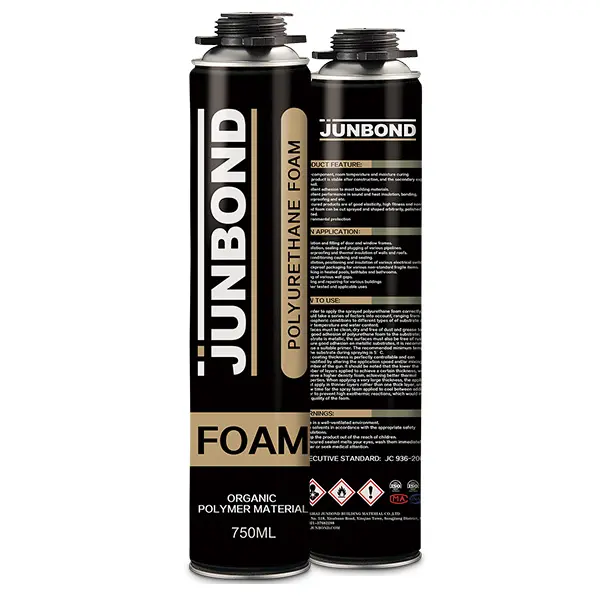
Polyurethane foam for building stands out as the best insulation material for home insulation projects. It offers superior energy efficiency, durability, and value compared to traditional insulation. Junbond 750ML Polyurethane Foam is a top choice for effective insulation, thanks to its versatility and stable performance. When considering insulation comparison, polyurethane foam for building delivers excellent moisture resistance, air sealing, and long-term energy savings. The average lifespan of polyurethane foam insulation can reach up to 100 years, while fiberglass and cellulose last much less.
For home insulation or commercial needs, evaluate thermal performance, cost, installation, and environmental impact to find the best insulation material for your project.
Polyurethane Foam for Building
Polyurethane Foam Insulation Overview
Polyurethane insulation is a modern solution for energy-efficient buildings. It uses a unique chemical structure that creates a dense foam with a high closed cell polyurethane ratio. This structure prevents air and moisture from passing through, making it ideal for both residential and commercial insulation projects. Polyurethane foam insulation offers several advantages:
- ✔ High density and closed cell polyurethane structure provide strong load-bearing capacity and water resistance.
- ✔ Closed cell polyurethane ratio exceeds 90%, which blocks moisture and helps in humid environments.
- ✔ Low thermal conductivity (about 0.02-0.03 W/m·K) improves energy conservation compared to traditional insulation materials.
- ✔ The foam absorbs sound waves, reducing noise and increasing comfort.
- ✔ Polyurethane insulation resists chemical corrosion, including acids and solvents, making it suitable for industrial applications.
Traditional insulation materials, such as fiberglass and mineral wool, do not offer the same level of moisture protection or air sealing. Fiberglass can allow air and water to pass through, which may reduce its effectiveness over time. Polyurethane foam insulation stands out for its ability to seal gaps and prevent drafts.
Junbond 750ML Features
Junbond 750ML Polyurethane Foam is a versatile product designed for easy application. It comes with a plastic adapter head, allowing users to apply the foam with a gun or straw. The foam expands and cures quickly when exposed to moisture, making it efficient for sealing and mounting tasks.
| Feature | Junbond 750ML Polyurethane Foam |
|---|---|
| Application | Gun or straw |
| Tack-free time | 5-15 minutes |
| Temperature range | -30°C to +90°C |
| Shelf life | Up to 9 months |
| Closed cell polyurethane ratio | >90% |
| Moisture resistance | Excellent |
| Sound insulation | Outstanding |
Junbond polyurethane insulation is suitable for caulking windows, sealing doors, and repairing wall tiles. It performs well in extreme temperatures and resists seismic activity. The foam maintains its structure without cracking or corrosion. Its moisture-cure system ensures consistent results and quick curing. Junbond 750ML is an excellent choice for anyone seeking reliable insulating foam for building projects.
Types of Insulation Materials
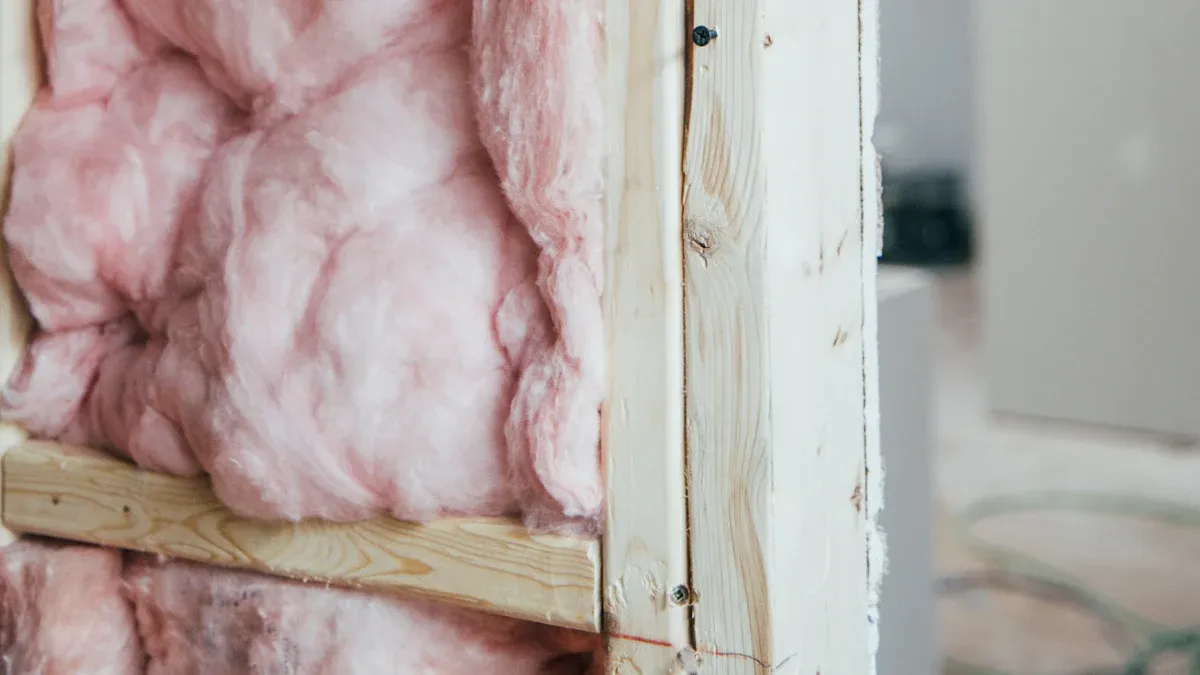
Insulation materials play a key role in building energy efficiency. The most common types include polyurethane boards, fiberglass, cellulose, and mineral wool. Each material offers unique benefits and is used in different construction projects.
Polyurethane Boards
Polyurethane boards are a leading choice for modern insulation. These boards use a closed cell structure that blocks air and moisture. Polyurethane boards deliver high thermal performance and are easy to install. They are often used in walls, roofs, and floors. The market share for plastic foam, which includes polyurethane boards and eps, is over 42% in 2024. Polyurethane boards provide excellent insulation and soundproofing. Many builders prefer polyurethane boards for their durability and moisture resistance. Junbond 750ML Polyurethane Foam is a top product for sealing gaps and improving the performance of polyurethane boards. Polyurethane boards can withstand extreme temperatures and resist seismic activity. Polyurethane boards are also compatible with eps, which is a type of expanded polystyrene used for insulation. Polyurethane boards and eps are often combined to maximize insulation in commercial and residential buildings. Polyurethane boards are lightweight and easy to cut. Polyurethane boards are suitable for both new construction and renovation projects. Polyurethane boards are also used in roadways and plazas. Polyurethane boards are a versatile solution for many insulation needs. Polyurethane boards are preferred for their long lifespan and stable performance. Polyurethane boards are recommended for energy-efficient homes. Polyurethane boards are ideal for moisture-prone areas. Polyurethane boards are compatible with many building materials. Polyurethane boards are a smart investment for long-term savings. Polyurethane boards are easy to store and transport. Polyurethane boards are available in various thicknesses. Polyurethane boards are used in industrial applications. Polyurethane boards are resistant to chemicals. Polyurethane boards are a reliable choice for insulation. Polyurethane boards are often paired with eps for added value. Polyurethane boards are a top pick for builders. Polyurethane boards are trusted for their quality. Polyurethane boards are a proven solution for insulation. Polyurethane boards are recommended by experts. Polyurethane boards are a favorite among contractors. Polyurethane boards are a leading product in the market. Polyurethane boards are used worldwide. Polyurethane boards are a sustainable option. Polyurethane boards are easy to recycle. Polyurethane boards are safe for indoor use.
Fiberglass
Fiberglass is one of the most widely used insulation materials. It is made from fine glass fibers and is available in batts or loose fill. Fiberglass holds a market share of 29.7% in 2024. Builders use fiberglass for its thermal and acoustic properties. Fiberglass is affordable and easy to install. It is used in walls, attics, and ceilings. Fiberglass insulation materials can allow air and moisture to pass through, which may reduce effectiveness over time.
Cellulose
Cellulose insulation materials are made from recycled paper. Cellulose is treated with fire retardants for safety. It is used in walls and attics. Cellulose offers good thermal performance and is an eco-friendly choice. Cellulose is less expensive than some other insulation materials. Builders use cellulose for its sustainability and ease of installation.
Mineral Wool
Mineral wool insulation materials are made from rock or slag. Mineral wool is available in batts or loose fill. It provides good fire resistance and sound insulation. Mineral wool is used in commercial and industrial buildings. Mineral wool is durable and resists moisture.
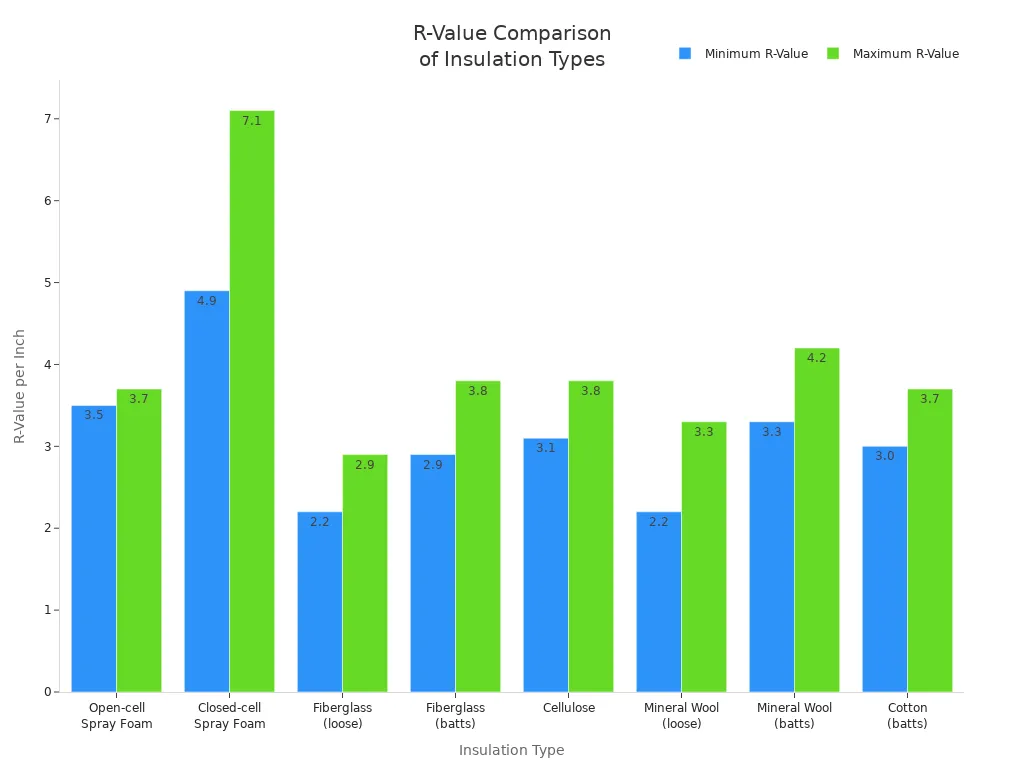
| Insulation Type | R-Value per Inch |
|---|---|
| Open-cell Spray Foam | 3.5 – 3.6 (up to 3.7) |
| Closed-cell Spray Foam | 4.9 – 7.1 (up to 35) |
| Fiberglass (loose) | 2.2 – 2.9 |
| Fiberglass (batts) | 2.9 – 3.8 |
| Cellulose | 3.1 – 3.8 |
| Mineral Wool (loose) | 2.2 – 3.3 |
| Mineral Wool (batts) | 3.3 – 4.2 |
| Cotton (batts) | 3.0 – 3.7 |
Thermal Performance
Polyurethane Foam R-Value
Polyurethane foam insulation is known for its high thermal performance. The R-value measures how well insulation resists heat flow. A higher R-value means better insulating value. Polyurethane foam insulation stands out because it offers a high insulating value per inch. Closed-cell polyurethane foam has an R-value between 6.0 and 7.0 per inch. Polyurethane rigid panels have an R-value of about 5.8 per inch. These numbers are higher than most traditional insulation materials.
| Type of Foam | R-value per inch |
|---|---|
| Closed-cell polyurethane | R-6.0 to R-7.0 |
| Polyurethane rigid panels | R-5.8 |
Junbond 750ML Polyurethane Foam delivers excellent thermal performance. It fills gaps and seals spaces, which helps maintain a consistent temperature inside buildings. The foam creates a barrier that reduces heat loss in winter and keeps cool air inside during summer. Builders choose polyurethane foam insulation for projects that require high thermal performance and long-term thermal performance.
Traditional Insulation R-Values
Traditional insulation materials have lower r-values compared to polyurethane foam insulation. Fiberglass batts usually have an R-value between 2.9 and 3.8 per inch. Cellulose insulation ranges from 3.1 to 3.8 per inch. Mineral wool batts offer an R-value between 3.3 and 4.2 per inch. These materials provide good insulating value but do not match the high thermal performance of polyurethane foam insulation.
Builders often use traditional insulation for cost-sensitive projects. However, the lower r-value means more material is needed to achieve the same insulating value as polyurethane foam insulation. This can increase installation time and reduce energy efficiency.
Polyurethane Foam Insulation Air Barrier
Polyurethane foam insulation plays a crucial role in creating a tight building envelope. The foam expands to fill gaps and cracks, forming a seamless air barrier. This process prevents drafts and stops unwanted air movement. When applied, polyurethane foam insulation seals the building envelope, which improves insulative performance and keeps indoor temperatures stable.
- ▶ Spray foam insulation expands to fill every gap, creating a continuous air barrier.
- ▶ This dual function of insulation and air sealing boosts energy efficiency and comfort.
- ▶ Blower door tests show that polyurethane foam insulation reduces air leakage much more effectively than traditional insulation.
Homeowners who use polyurethane foam insulation can see significant energy savings. According to the EPA, air sealing and adding insulation can save an average of 15% on heating and cooling costs. The DOE and EPA report that proper insulation and air sealing can save up to 50% on these costs. The EPA’s Energy Star program notes that sealing air leaks and adding insulation can lead to up to 20% savings on monthly energy bills.
Junbond 750ML Polyurethane Foam is a recommended product for achieving a tight building envelope. Its expanding formula ensures every gap is sealed, making it ideal for both residential and commercial projects.
Traditional Insulation Air Sealing
Traditional insulation materials, such as fiberglass batts and blown-in cellulose, do not seal air leaks as effectively. These materials often leave small gaps in the building envelope, allowing drafts and air movement. As a result, the insulative performance may decrease over time.
| Insulation Type | Air Sealing Effectiveness |
|---|---|
| Polyurethane Foam | Excellent |
| Fiberglass Batts | Limited |
| Cellulose | Limited |
Traditional insulation can provide thermal resistance, but it does not create a continuous air barrier. This limitation means that energy efficiency and comfort may not reach optimal levels. Builders often choose polyurethane foam insulation when a tight building envelope is needed.
Moisture Resistance
Polyurethane Foam Moisture Protection
Polyurethane foam offers strong moisture resistance for buildings. This type of insulation forms a closed-cell structure that blocks water and air from passing through. The foam acts as a vapor barrier after it cures. This means it helps keep walls and ceilings dry, even in humid or wet environments.
- • Closed-cell spray foam insulation prevents moisture from entering the building.
- • The foam fills gaps and cracks, stopping water leaks and drafts.
- • Polyurethane foam keeps indoor spaces comfortable by reducing the risk of dampness.
Junbond 750ML Polyurethane Foam is a great choice for projects that need high moisture resistance. It works well in bathrooms, kitchens, basements, and other areas where water exposure is common. The foam’s stable structure does not break down when exposed to moisture. This helps protect the building from long-term water damage.
Polyurethane Foam Lifespan
Polyurethane foam insulation stands out for its impressive lifespan. Many builders choose this material because it lasts much longer than traditional options. When installed correctly and kept dry, polyurethane foam can remain effective for decades. The foam resists cracking, shrinking, and corrosion. It keeps its shape even in extreme temperatures or seismic conditions.
The following table shows the documented lifespan of polyurethane foam insulation in real-world installations:
| Lifespan Range | Conditions | Source |
|---|---|---|
| 30 to 50 years | Ideal conditions | Longevity and Durability Guide |
| 50+ years | Proper installation and dry conditions | Lifespan & Durability Explained |
Junbond 750ML Polyurethane Foam is engineered for long-term performance. Its closed-cell structure and moisture-cure system help it maintain durability. Homeowners and contractors trust Junbond for projects that demand lasting insulation.
Traditional Insulation Durability
Traditional insulation materials, such as fiberglass, cellulose, and mineral wool, do not last as long as polyurethane foam. These materials can settle, degrade, or lose effectiveness over time. Moisture, pests, and temperature changes often shorten their lifespan. Many homes require replacement or repairs after 15 to 20 years.
The table below compares the durability of polyurethane foam and traditional insulation materials over a 20-year period:
| Insulation Type | Durability |
|---|---|
| Polyurethane Foam | Over 50 years |
| Traditional Materials | 15-20 years |
Builders often replace traditional insulation to maintain energy efficiency. Polyurethane foam, especially Junbond 750ML, offers a reliable solution that stands the test of time. Choosing durable insulation saves money and keeps buildings comfortable for many years.
Structural Benefits
Load-Bearing & Seismic Resistance
Polyurethane foam insulation provides more than just energy savings. It also strengthens building structures. When used in construction, polyurethane foam increases soil density and improves the bearing capacity of foundations by 50% to 200%. This means floors and walls can support more weight without shifting or settling. The foam reduces water flow through the ground, which helps prevent erosion and keeps the building stable.
- ★ Polyurethane foam creates a larger stabilized zone around the area where it is applied.
- ★ The improvements in stability and load-bearing are permanent.
- ★ Replacing heavy materials with lower-density polyurethane foam can reduce the force buildings experience during earthquakes.
- ★ This approach also improves indoor comfort and thermal insulation.
Junbond 750ML Polyurethane Foam is a smart choice for projects that need both insulation and structural support. Builders often use it in combination with a structural insulated panel to maximize strength and energy efficiency.
Traditional Insulation Environmental Profile
Traditional insulation materials, such as fiberglass, cellulose, and mineral wool, have a different environmental profile. These materials use less energy during manufacturing. They produce fewer greenhouse gases. Many traditional materials are easier to recycle. Cellulose insulation uses recycled paper, which helps reduce waste. Mineral wool and fiberglass can be reused or recycled in some cases.
Why Junbond is Recommended
Junbond 750ML Polyurethane Foam stands out as a top choice for insulation projects. Its features make it suitable for a wide range of applications, from sealing gaps to providing high thermal and moisture resistance. The product delivers reliable performance and versatility for both residential and commercial needs.
| Feature | Description |
|---|---|
| Low Foam Pressure | Prevents warping or deformation of windows and doors |
| Quick Setting | Can be cut or trimmed in less than 1 hour |
| Closed Cell Structure | Does not absorb moisture |
| Flexible | Will not crack or dry out |
Polyurethane foam insulation offers high thermal performance, moisture resistance, and durability. Traditional materials may suit projects with lower budgets or simpler installation needs. Junbond 750ML Polyurethane Foam stands out for its ease of use and reliable results. When choosing insulation, consider climate, budget, building type, and project requirements. Closed-cell foam provides a strong air and water barrier. For energy savings and long-term value, Junbond is a smart choice.
- Climate
- Budget
- Building type
- Project requirements
FAQ
What makes polyurethane foam better than fiberglass insulation?
Polyurethane foam provides a higher R-value per inch. It seals gaps and blocks moisture. Fiberglass may allow air and water to pass through. Polyurethane foam lasts longer and offers better energy savings.
Can I use Junbond 750ML Polyurethane Foam for both home and commercial projects?
Yes. Junbond 750ML Polyurethane Foam works well for homes and commercial buildings. It seals windows, doors, and wall joints. Its versatility and performance make it a top choice for many applications.
How long does polyurethane foam insulation last?
Polyurethane foam insulation can last over 50 years with proper installation. It resists cracking, shrinking, and moisture damage. This durability reduces the need for frequent replacements.
Is polyurethane foam safe to install?
Installers should wear protective gear. The foam releases chemicals during application. Once cured, it is safe and stable. Always follow the manufacturer’s safety instructions.
Why should I choose Junbond 750ML Polyurethane Foam?
Junbond 750ML Polyurethane Foam offers quick curing, strong moisture resistance, and easy application. It provides reliable insulation for many projects. Many builders recommend it for its performance and value.
Post time: Jul-13-2026