
Large infrastructure initiatives in Southeast Asia and global trading hubs demand robust sealing technologies to handle volatile weather patterns. Leading trade exhibitions, such as Worldbex in Manila and the Canton Fair in Guangzhou, highlight the latest industry advancements for international project managers. These venues allow engineering firms to evaluate materials under realistic environmental stress criteria. To resolve complex structural movement and weatherproofing requirements, developers increasingly look toward comprehensive Certified Elastic Hybrid MS Sealant and IG Sealant Solutions to secure building envelopes. This technical review assesses the performance of modern advanced polymers in demanding climate zones. Evaluating these material innovations helps distributors minimize engineering risks and secure long-term asset structural durability across diverse municipal real estate developments.

Interfacial Hydrolytic Resiliency — Preserving Hybrid MS Matrix Integrity Under Saturated Marine Climates
Coastal regions across Southeast Asia expose architectural joints to a destructive mix of extreme humidity, high temperatures, and constant airborne salt spray. These marine factors frequently compromise standard perimeter seals by triggering rapid chemical hydrolysis at the bonding interface. When moisture continuously penetrates a low-tier compound, it breaks down the primary adhesive bonds, causing premature delamination from aluminum frames and concrete walls. Therefore, modern facade designs require high-performance modified silicone (MS) polymers that exhibit inherent hydrolytic stability. These advanced systems maintain their elastic memory without suffering from the reversion or hardening typical of legacy polyurethane formulations.
Specifically, the polymer backbones in elite hybrid systems utilize dense silane cross-linking networks to build a hydrophobic shield over target substrates. This microscopic barrier prevents moisture molecules from disrupting the interfacial chemical bonds. Consequently, the cured seal resists prolonged water immersion and severe saltwater exposure without losing its mechanical elasticity. This level of defense is critical for high-end residential and commercial projects located along coastal frontiers. Furthermore, the absence of free silicone oil prevents plasticizer migration, ensuring that adjacent natural stone facades remain completely free of oily stains. To support these strict architectural specifications, Junbond optimizes its hybrid formulation matrices to ensure excellent primerless adhesion. The resulting compound accommodates multi-axial joint expansion while protecting the building against severe moisture intrusion over decades of exposure.
Synchronous Deep-Section Cure — Chemical Kinetics of Two-Component IG Silicone Systems Against Dynamic Wind-Pump Effects
High-rise fenestration systems in monsoon-prone territories endure intense cyclic wind loads that create severe mechanical deflection along glass boundaries. During a tropical typhoon, the rapid changes in external barometric pressure produce a dangerous phenomenon known as the wind-pump effect. This continuous suction and compression put immense physical strain on the edge seals of insulating glass (IG) units. To prevent structural failure or edge-seal distortion, engineers require rapid-setting secondary seals that develop high modulus traits quickly. Standard single-component sealants cannot fulfill this role effectively because they depend entirely on ambient humidity to cure from the outside inward. This slow process leaves the internal glass structure vulnerable during early installation phases.
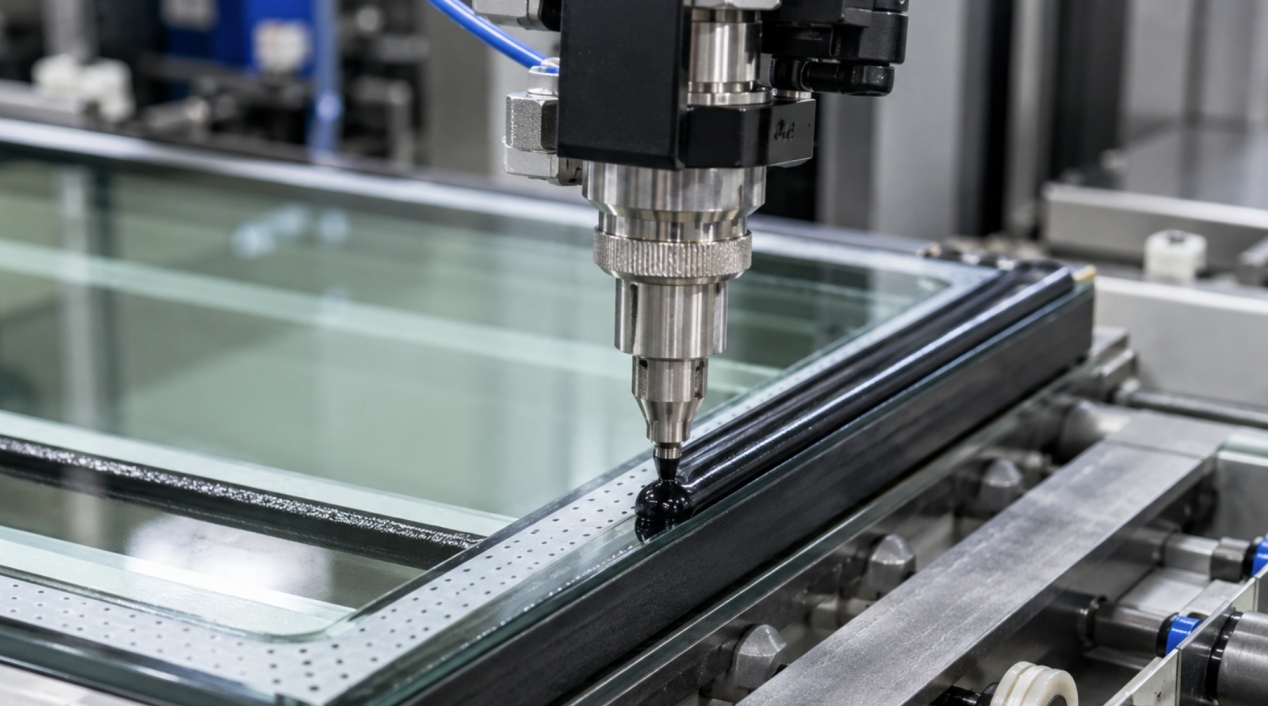
Alternatively, advanced two-component insulating glass sealant solutions resolve this mechanical vulnerability through an independent internal chemical condensation reaction. Mixing the base polymer with a specialized catalyst triggers a uniform chemical cross-linking process across the entire depth of the joint simultaneously. Because this reaction does not rely on atmospheric moisture extraction, the compound achieves complete deep-section curing on a highly predictable timeline. This rapid curing cycle maximizes output efficiency for high-speed glass manufacturing lines and ensures immediate handling strength. Furthermore, the resulting high-modulus matrix minimizes primary seal distortion, effectively locking argon gas within the IG cavity to maintain thermal insulation values. Shanghai Junbond Advanced Chemicals Co., Ltd manufactures these specialized dual-component formulations under rigorous chemical processing parameters to guarantee uniform viscosity and reliable on-site application.
Structural Fatigue Diagnostics — Empirical Inspection Protocols for Monsoon-Prone High-Rise Fenestration
Project engineers and international facade consultants cannot rely on basic material claims when selecting compounds for landmark skyscrapers. Instead, they require exhaustive empirical diagnostics that prove a sealant can withstand extreme mechanical and environmental fatigue over its operational life. Standard engineering inspection protocols involve placing cured joint assemblies into accelerated weathering chambers to simulate years of solar radiation, temperature cycling, and high-frequency shearing. The material must maintain high tensile retention values and resist tear propagation under continuous stress. Any sign of premature cracking or bond fatigue during these simulations disqualifies a formulation from high-risk structural specifications.
Furthermore, verifying international quality standards like ISO certifications provides procurement teams with concrete evidence of product homogeneity. When a manufacturer operates under strict quality frameworks, every production batch delivers consistent physical metrics, including extrusion rates and Shore A hardness values. This consistency prevents unexpected material failures during automated application processes on the factory floor. Junbond actively supports global engineering networks by delivering fully documented laboratory validation sheets for its product lines. This transparent technical support simplifies the material submittal process, allowing international developers to satisfy strict local municipal construction codes with total confidence.
Decentralized Scale and Digital Conduits — Streamlining ISO-Compliant B2B Procurement for Infrastructure Scale
Navigating large-scale commercial procurement requires a strategic combination of direct technical consultation and robust industrial supply capacity. International trade venues like Worldbex provide localized engineering teams with a physical platform to analyze material samples and review performance data. Concurrently, global platforms like the Canton Fair offer virtual and physical channels to coordinate large-scale contract logistics across borders. These combined exhibition conduits enhance supply chain transparency and allow procurement managers to evaluate manufacturing infrastructures thoroughly before committing to bulk seasonal orders. Aligning with an established producer minimizes supply line disruptions during peak construction periods.
To handle massive global infrastructure demands effectively, Junbond(Shanghai Junbond Advanced Chemicals Co., Ltd) manages seven advanced chemical manufacturing bases across China. This decentralized industrial layout provides a massive production footprint that buffers overseas clients against raw material scarcity and regional shipping delays. Automated compounding equipment regulates each production step, ensuring absolute purity from raw polymer mixing to final packaging. Additionally, the group designs its bulk packaging configurations to withstand harsh temperature shifts during long-haul maritime transport across equatorial waters. This logistical protection ensures that the products arrive at international ports with their chemical properties and shelf lives fully intact. By combining industrial scale with specialized project advisory support, the enterprise helps worldwide partners turn regulatory environmental compliance into a clear market advantage. Ultimately, this robust manufacturing foundation helps international partners transform environmental compliance from a regulatory obstacle into a distinct competitive advantage. To explore their complete portfolio of certified green building materials or to coordinate a technical consultation for an upcoming facade development, architectural teams and distribution partners can access full documentation directly through the central web portal at https://www.junbond.com/.
Post time: Jun-27-2026