
Automotive pu sealant stands out as a reliable option for many car repair needs. Industry studies show that this type of sealant offers strong bonding for dissimilar materials, improved aesthetics, and excellent sealing properties. The table below summarizes key advantages and disadvantages:
| Advantages | Disadvantages |
|---|---|
| Dissimilar material bonding | Surface preparation is crucial |
| Stress distribution | Longer curing times |
| Weight reduction | Temperature sensitivity |
| Improved aesthetics | Variable chemical resistance |
| NVH reduction | Higher costs |
| Sealing properties | Challenges with reversibility |
i Automotive PU Sealant Overview
Definition and Key Features
Automotive pu sealant is a specialized adhesive used in the automotive industry for bonding and sealing different parts of a vehicle. This type of sealant cures when it reacts with moisture in the air, creating a flexible and permanent seal. Many professionals choose automotive pu sealant because it offers several important features:
- • High resistance to weather, UV rays, and aging, which makes it suitable for outdoor use.
- • Strong tear resistance, allowing it to handle movement and vibration without losing its seal.
- • Fast curing time, usually from a few hours to a day, depending on the product.
- • Paintable surface after curing, which helps achieve a smooth and uniform finish.
“Automotive pu sealant stands out for its ability to bond dissimilar materials and maintain durability under tough conditions.”
Typical Uses in Car Repairs
Automotive pu sealant plays a key role in many car repair tasks. Technicians often use it for:
- Installing and sealing windshields to prevent leaks and ensure safety.
- Bonding body panels to improve strength and reduce noise.
- Sealing interior and exterior trim to protect against water and dust.
- Attaching decorative elements and side glass for a clean appearance.
These uses show how automotive pu sealant helps maintain both the function and look of a vehicle.
Junbond JB20 Product Highlights
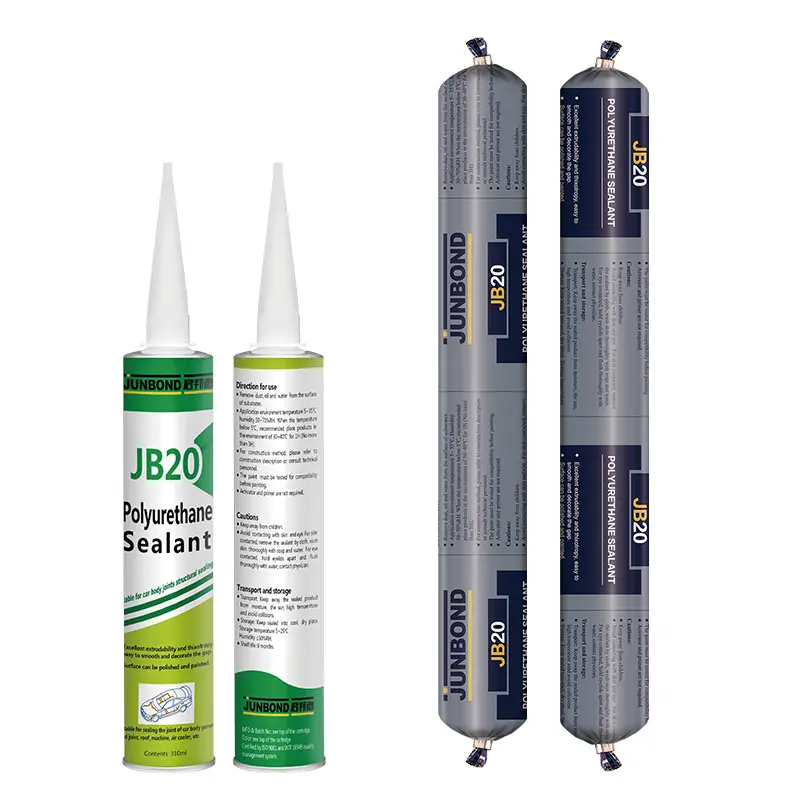
Junbond JB20 represents a high-performance option in the automotive pu sealant category. This product offers easy application and a bubble-free finish, thanks to its thixotropic formula. Junbond JB20 bonds well to metal, glass, and painted surfaces. It also supports a wide range of automotive tasks, from windshield installation to sealing interior decorations. The product remains environmentally friendly and does not corrode the materials it touches. Junbond JB20 comes in different packaging sizes, making it suitable for both small repairs and larger projects.
+ Pros of Automotive PU Sealant
Strong Adhesion and Bonding
Automotive PU sealant creates a strong bond between different materials. Technicians rely on this sealant for tasks like windshield installation and body panel repair. The bond holds up under stress and vibration, which helps maintain vehicle safety. Junbond JB20 stands out for its thixotropic formula, allowing easy application and a bubble-free finish. The sealant forms a strong bond with metal, glass, and painted surfaces.
| Metric | Value |
|---|---|
| Adhesion Strength | Over 2.5 MPa |
| Usage in Windshield Applications | 76% in the U.S. |
| Cure Time | Less than 30 minutes |
| Tensile Strength | Over 3 MPa |
| Market Share of PU Sealants | 42% of automotive adhesives |
Durability and Weather Resistance
Durability is a major benefit of automotive PU sealant. The sealant resists aging, UV rays, and extreme temperatures. Junbond JB20 maintains its sealing properties in both hot and cold climates. It also withstands chemicals, oils, and environmental contaminants. These features help extend the lifespan of repairs and reduce maintenance costs.
High-performance PU sealant protects vehicles from harsh weather and environmental factors. It performs well in wind-driven rain tests and maintains seal integrity under pressure.
Waterproof and Airtight Sealing
Automotive PU sealant provides waterproof and airtight sealing. The sealant cures through moisture reaction, forming a flexible and durable seal. Junbond JB20 offers superior sealing properties, which protect the interior of vehicles from leaks and corrosion.
- The sealant exhibits excellent UV stability.
- It resists common cleaners and environmental contaminants.
- It is suitable for both interior and exterior applications.
Easy Application and Fine Finish
Junbond JB20 features exceptional thixotropy, making application easy and smooth. Users achieve a fine finish that enhances the appearance of the repair. The environmentally friendly formula causes no corrosion or pollution to substrates.
- Cons of Automotive PU Sealant
Curing Time and Application Challenges
Automotive PU sealant often requires a longer curing time compared to other adhesives. This delay can affect workflow in busy shops. For example, the Shuode 600ml product specification shows a curing time of 45 minutes under standard conditions.
Cost Compared to Alternatives
Automotive PU sealant usually costs more than silicone or rubber-based sealants. This higher price can make it less attractive for budget-conscious repairs. While PU sealant offers superior performance for critical repairs like windshields, some technicians may prefer silicone for its lower price and faster curing time.
Lifespan and Flexibility Limitations
The lifespan of automotive PU sealant depends on the environment and the quality of the application. Polyurethane systems show good flexibility and impact resistance. They withstand mounting pressures and thermal expansion while providing a durable protective barrier.
- Polyurethane systems are flexible and impact-resistant.
- No documented limitations on lifespan and flexibility.
- Flexible polyurethane systems withstand mounting pressures and thermal expansion.
Temperature and Humidity Sensitivity
Automotive PU sealant performs best within a specific temperature and humidity range. Junbond JB20 works well when applied between 5°C and 35°C and humidity levels of 50% to 70% RH. This sensitivity can be a disadvantage in regions with extreme weather.
VS Pros and Cons Compared to Alternatives
PU vs. Silicone Sealant
Silicone sealants cure quickly and resist high temperatures. However, polyurethane sealants like Junbond JB20 offer stronger adhesion and greater durability. Polyurethane bonds better to metal and glass, and once cured, it remains more flexible to movement.
PU vs. Rubber-Based Sealant
Rubber-based sealants provide basic sealing for non-critical areas. Polyurethane sealants outperform them in weather resistance and longevity. Junbond JB20 delivers a bubble-free finish and maintains a tight seal even in wet conditions.
| Feature | PU Sealant (Junbond JB20) | Silicone Sealant | Rubber-Based Sealant |
|---|---|---|---|
| Adhesion | Excellent | Good | Moderate |
| Durability | High | Moderate | Low |
| Flexibility | Superior | Good | Good |
| Curing Time | Moderate | Fast | Moderate |
| Cost | Higher | Lower | Lowest |
Where PU Excels or Falls Short
- ✓ It bonds to a wide variety of surfaces, including metal and glass.
- ✓ Its elasticity absorbs movement, which helps prevent seal failure.
- ✓ It resists abrasion, chemicals, and UV rays, making it suitable for exterior and industrial applications.
- ✓ It performs well in wet conditions and maintains water resistance.
Technicians often select polyurethane sealants like Junbond JB20 for tasks that demand strong bonding, flexibility, and lasting protection.
♦ Windshield and Other Applications
Windshield Installation Benefits
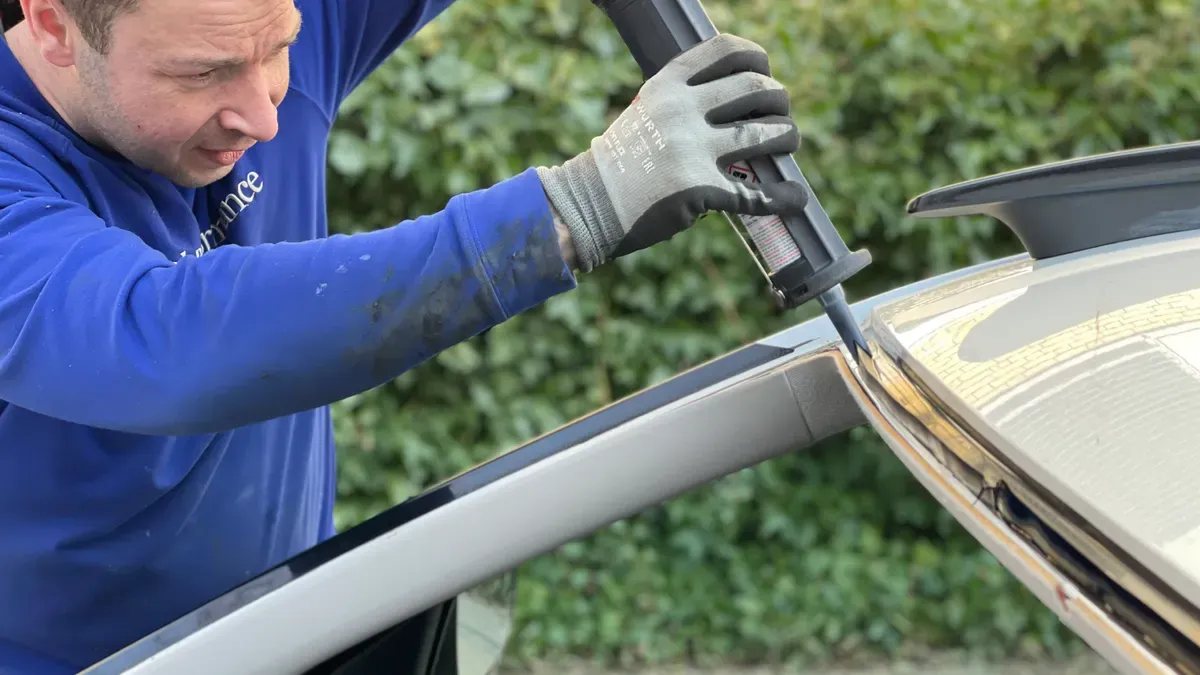
Automotive professionals often choose polyurethane windshield adhesive for windshield installation. This adhesive creates a strong and lasting bond between the glass and the car frame, providing a watertight and airtight seal. It also absorbs road vibrations, protecting the glass from cracks and ensuring passenger safety.
Side Glass and Interior Sealing
Polyurethane windshield adhesive works well for side glass and interior tasks. It bonds glass to metal or plastic securely, preventing leaks and blocking dust. Its flexibility allows it to adjust to small movements inside the car, which helps avoid future repairs.
Exterior Trim and Decorative Uses
In exterior trim, this adhesive provides a strong bond that holds up against harsh weather, rain, and temperature swings. It creates a seamless look, improving the car’s appearance while offering long-lasting protection for moldings and decorative panels.
✓ Choosing the Right PU Sealant
Factors to Consider
Junbond JB20 Selection Tips
Junbond JB20 stands out as a reliable choice. Follow these steps for effective use:
- Clean all surfaces thoroughly. Remove old glue, dirt, and oil with a scraper and isopropyl alcohol.
- Make sure the area is completely dry before applying the sealant.
- For difficult surfaces, apply a compatible primer within 30 minutes before sealing.
- Use a glue gun for even application. Move at a steady speed to avoid bubbles or gaps.
- Trim the joint quickly after application for a neat finish.
- Work in an environment near 25°C and 50% humidity. Avoid extreme temperatures and rain.
- Wear gloves and goggles. Keep the workspace ventilated.
? FAQ
What surfaces does automotive PU sealant bond to best?
Automotive PU sealant bonds well to metal, glass, and painted surfaces. Technicians use it for windshields, body panels, and trim.
How long does it take for PU sealant to cure?
Curing time depends on temperature and humidity. Most PU sealants cure within a few hours to one day. Always check the product label.
Can DIY users apply Junbond JB20 easily?
Yes. Junbond JB20 features thixotropy for smooth application. Users achieve a bubble-free finish with basic tools and proper surface preparation.
Post time: Jul-06-2026